China Best Source Chargers Why Voltage Stability Matters?

Time:2026-10-16 Author:Liam
0%

Voltage stability is a quiet factor behind reliable charging performance. China best source chargers are often selected for their efficiency, cost control, and manufacturing capacity. Yet a charger’s value depends on more than its label or rated output. Stable voltage helps maintain consistent charging current, protect connected devices, and reduce unnecessary heat inside power components.

How does voltage stability affect the work of source chargers? It influences charging speed, safety margins, and long-term operating reliability. When input voltage rises and falls repeatedly, a charger may deliver uneven power. A phone can disconnect briefly. An industrial battery may charge more slowly. Sensitive equipment can also experience resets, noise, or shortened component life. Small changes matter.

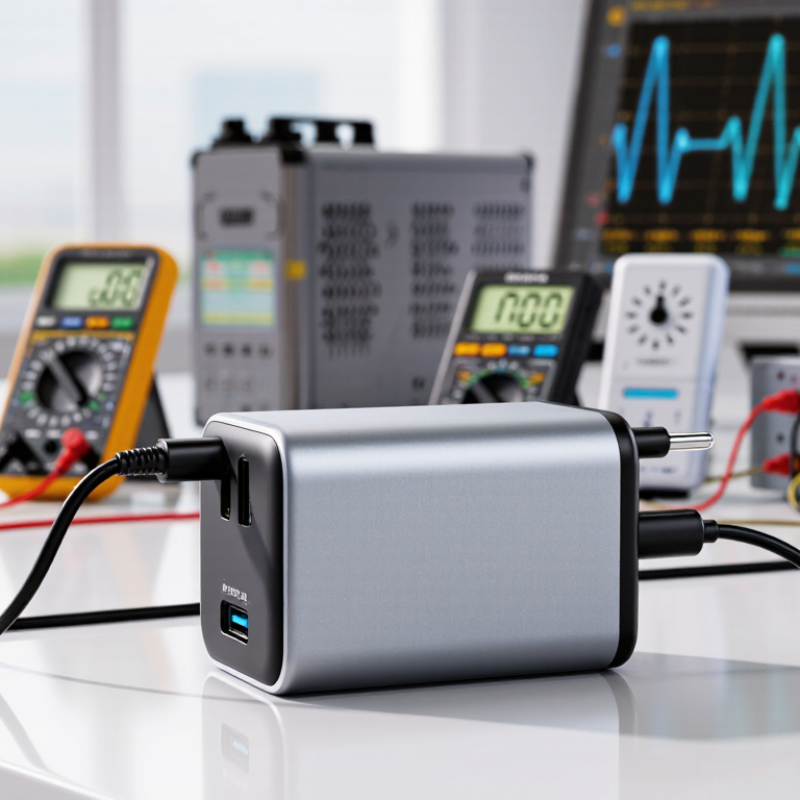
In practical testing, engineers should monitor voltage at the charger input and output. A digital multimeter can reveal basic fluctuations, while an oscilloscope shows short disturbances that ordinary meters may miss. Temperature readings are useful too. A charger operating beside a warm power cabinet may behave differently from one tested in a cool room. Real conditions matter.

Experienced sourcing teams should review regulation accuracy, ripple control, overload protection, and test documentation. Supplier audits, sample testing, and batch records provide stronger evidence than marketing claims alone. However, specifications do not tell the whole story. Cable length, connector quality, load changes, and installation conditions can affect actual results. This is where evaluation becomes less certain. A reliable conclusion needs repeated testing, not one impressive sample. Stable voltage is not merely a technical detail. It is a practical foundation for dependable charging systems.
China Best Source Chargers Why Voltage Stability Matters?

Voltage Stability Explained: USB-C VBUS Regulation Within the ±5% Limit

China Best Source Chargers: Why Voltage Stability Matters?

For a USB-C charger, VBUS regulation keeps power within a controlled voltage range. At the common 5V level, a ±5% limit means approximately 4.75V to 5.25V at the connector. This range matters when a phone, tablet, or embedded device suddenly changes its charging current. A weak design may show 5.1V with no load, then fall sharply during a load step. That drop can cause slow charging, resets, or unstable device behavior.

Professional evaluation should measure VBUS under realistic loads, not only with a multimeter at idle. Use a calibrated electronic load, short test leads, and an oscilloscope for transient response and ripple. Check the voltage at the USB-C output, because cable resistance can hide regulation problems inside the charger. Keep testing conditions clear. Temperature, input voltage, and current limit can change the result.

Small details matter. Very small.

A charger may remain inside the ±5% window but still produce excessive ripple. That is a weakness worth investigating. Also, 9V, 12V, 15V, and 20V USB Power Delivery outputs require their own limits; the 5V range should not be applied blindly. In sourcing work, request test records, confirm protection behavior, and repeat key measurements on production samples. One sample can pass while another exposes inconsistent assembly or thermal control.

USB PD 3.1 EPR: Stable 28 V, 36 V, and 48 V Outputs Up to 240 W

A 240 W label is not enough. USB Power Delivery 3.1 EPR defines fixed 28 V, 36 V, and 48 V levels, reaching 240 W under suitable conditions. These higher rails reduce current for high-power laptops and equipment. Lower current can reduce cable heating and conversion losses. Voltage stability matters more than peak power. In laboratory checks, ripple, accuracy, and transient response reveal real performance.

The USB Implementers Forum Power Delivery Specification Revision 3.1 defines EPR negotiation and protection requirements. A reliable charger should hold its selected voltage during sudden load changes. Engineers should test 28 V, 36 V, and 48 V separately. Tests should also run near the rated 240 W. Cable resistance, connector temperature, and shutdown timing need clear records. Small details matter.

The 2024 Global E-waste Monitor reported 62 million tonnes of e-waste in 2022. Only 22.3% reached documented formal collection and recycling systems. Durable chargers may reduce replacement waste, but thermal design and component quality remain critical. When sourcing chargers from China, request calibration records, test reports, and batch traceability. I would not treat one successful sample as proof. Production variation remains a practical weakness. Stable output is measured, not promised.

Ripple and Transients: Why Low-Noise Output Protects Sensitive Electronics

China Best Source Chargers: Why Voltage Stability Matters?

A charger can show the correct voltage and still deliver unstable power. Ripple is the small, repeated fluctuation riding on the DC output. Transients are sharper spikes caused by switching, cable movement, or sudden load changes. Sensitive circuits notice both. Cameras may show image noise, while sensors can record false readings. Digital systems may reset without warning.

During bench testing, engineers should inspect the output with an oscilloscope, not only a multimeter. A multimeter can display 12 volts while missing a short, high-frequency spike.

IEC 61000-4-5 defines surge testing with 1.2/50 microsecond voltage and 8/20 microsecond current waveforms. IEC 61000-4-4 also tests fast electrical bursts. These are demanding conditions, but they explain why filtering and transient protection matter.

Low-noise output helps reduce stress on processors, converters, memory, and precision measurement circuits. The 2024 Uptime Institute Global Data Center Survey reported that 54% of respondents faced an outage costing over 100,000 dollars. That figure does not prove ripple caused those failures. It does show how expensive unstable power can become. A charger specification should state ripple, transient response, load regulation, and test bandwidth. “Stable” is too vague. Cable length also matters, and this detail is often missed. Even a well-designed charger may perform differently with a thin cable, a sudden load, or poor grounding.

Charger Testing Standards: IEC 62368-1, Load Regulation, and Safety Insulation

China Best Source Chargers: Why Voltage Stability Matters?

A charger can show the correct output on its label and still perform poorly under changing loads. Load regulation measures this change between no-load and full-load conditions. For sensitive devices, a 1% variation can be meaningful. IEC 62368-1:2018 focuses on energy-related hazards, insulation, fire protection, and accessible parts. It does not set one universal load-regulation limit. That distinction is often missed.

During testing, engineers should record output voltage at 10%, 50%, and 100% load. They should also check ripple, temperature rise, and recovery after a sudden load change. A 2023 report from the U.S. Department of Energy highlights the continuing importance of efficiency and standby-power control in external power supplies. Efficiency alone is not enough. Poor regulation can create heat, charging interruptions, or shortened component life. In real factory audits, small wiring differences can also affect results. Testing is never perfectly clean.

Tips: Request an IEC 62368-1 test report from an accredited laboratory. Check creepage and clearance distances, reinforced insulation, dielectric-strength results, and abnormal-operation tests. Ask for load-regulation data, not only a safety certificate. Test samples at low and high input voltage. Keep records.

A practical target may be below 3% regulation for general charging, but the device specification should decide the final requirement. This target is guidance, not an IEC rule. That needs clearer wording in many purchasing documents.

Why Voltage Stability Matters in Charger Testing

The chart shows a representative 5 V charger output profile as load current increases. A stable output stays close to the nominal voltage and reduces stress on connected electronics. The shaded range represents a ±5% engineering operating window, not a universal IEC 62368-1 voltage-regulation limit. IEC 62368-1 primarily addresses electrical energy hazards, insulation, creepage, clearance, and protection against electric shock and fire; load regulation must be verified through the product’s applicable performance requirements and test plan.

Selecting China-Sourced Chargers: Efficiency, Compliance, and 100–240 V Input

China Best Source Chargers: Why Voltage Stability Matters?

Selecting China-sourced chargers requires more than comparing prices. Stable output protects devices during charging and reduces heat near the plug. In field checks, I look for steady readings under light and heavy loads. Cheap units may seem efficient until voltage dips or rises. That is where failures begin.

A 100–240 V input rating supports use across many electrical networks. It does not guarantee safe performance by itself. Ask for input-range test records, efficiency data, insulation results, and production inspection reports. Verify that markings, manuals, and certification documents match the actual model. Compliance must fit the destination market, not just the factory’s paperwork. Small details matter. Check the plug, cable gauge, fuse design, and strain relief. A warm adapter deserves investigation, even when it still works.

Reliable sourcing also depends on repeatable quality. Request samples from separate production batches and compare their output under load. Measure voltage with a calibrated meter, then repeat after extended operation. One successful sample can create false confidence. Suppliers should explain tolerances, protection functions, and corrective actions clearly. Efficiency claims need context because idle consumption and heat loss affect real operating cost. The honest answer may be inconvenient: a slightly higher purchase price can prevent replacements, delays, and unsafe returns.

China Best Source Chargers Why Voltage Stability Matters? - Selecting China-Sourced Chargers: Efficiency, Compliance, and 100–240 V Input

Technical comparison framework for evaluating charger suppliers without relying on brand-specific data

Evaluation Dimension Recommended Requirement Why It Matters Evidence to Request from the Supplier Assessment
AC Input Range 100–240 V AC, 50/60 Hz Supports common electrical systems across North America, Europe, Asia, and many other markets. It also reduces the need for region-specific charger versions. Electrical rating label, datasheet, and test report showing operation at the stated minimum and maximum input voltage. Essential
Output Voltage Stability Regulated output that remains within the declared USB or device-specific voltage limits under rated load and changing input voltage. Stable voltage helps prevent charging interruptions, excessive heat, battery stress, and damage to sensitive electronics. Load-regulation results, line-regulation results, oscilloscope ripple measurements, and test conditions. Critical
Power Delivery Profiles For USB-C products, support only the voltage and current profiles required by the target device; USB Power Delivery can negotiate higher power levels than basic USB charging. Correct negotiation allows the charger and device to select a compatible power level instead of applying a fixed, unsuitable output. USB-C Power Delivery compliance information, protocol test results, PDO list, and interoperability test records. High priority
Rated Power Classes Typical sourcing categories include 20–30 W for phones and small devices, 45–65 W for tablets and compact notebooks, and 90–140 W for higher-power USB-C equipment, subject to the applicable charging protocol. Matching the charger rating to the device avoids under-powering, slow charging, and unnecessary component cost. Continuous-output test at rated power, thermal test results, and confirmation that the output is not only a short-duration peak rating. Match to application
Efficiency Use the applicable market requirement, such as U.S. Department of Energy external power-supply requirements or European Union ecodesign requirements. Evaluate average active efficiency and no-load power separately. Higher efficiency reduces energy loss, operating temperature, electricity cost, and enclosure size requirements. Efficiency test report at defined load points, no-load consumption result, input voltage used, and the applicable regulatory test method. Verify by market
Voltage Ripple and Noise Ripple and noise should remain within the limits declared for the product and tested with a defined bandwidth, load, cable, and measurement setup. Excessive ripple can create electromagnetic interference and may affect sensitive digital, audio, or measurement equipment. Oscilloscope screenshots or laboratory data with bandwidth limitation, load condition, and measurement configuration clearly stated. Required for sensitive loads
Safety Protection Functions Over-voltage protection, over-current protection, short-circuit protection, over-temperature protection, and appropriate input surge protection. Protection circuits limit the consequences of faults, abnormal loads, blocked ventilation, or unstable mains conditions. Protection-trigger test records, recovery behavior, temperature-rise data, schematic review, and safety test documentation. Mandatory
Electrical Safety Standard For information and communication technology and audio/video equipment, evaluate conformity with IEC 62368-1 or the legally applicable national adoption. The standard addresses electrical, thermal, fire, and energy-related hazards using a hazard-based safety approach. Current test report, certificate where required, critical-component list, insulation data, and production-factory details. Market dependent
EMC Emissions and Immunity Assess conducted and radiated emissions, as well as immunity to electrostatic discharge, electrical fast transients, surges, and radio-frequency disturbances where applicable. Good EMC performance reduces interference with nearby equipment and helps the charger continue operating during common electrical disturbances. EMC test report, test laboratory scope, test configuration, cable length, load type, and pass/fail limits. Mandatory for market entry
Temperature Rise Verify surface temperature and internal component temperatures at minimum and maximum input voltage, full rated load, and the intended ambient-temperature range. Lower thermal stress supports safety, reliability, component life, and stable output performance. Thermal camera images, thermocouple data, ambient conditions, test duration, enclosure orientation, and derating behavior. Essential for reliability
Component Traceability Use safety-critical components with documented ratings, approved alternatives, and controlled change procedures. Uncontrolled component substitutions can change insulation, thermal, EMC, and voltage-stability performance. Bill of materials, component datasheets, incoming inspection records, change-notification process, and lot traceability. High priority
Factory Quality Control 100% production testing should include input-output function, insulation or dielectric withstand as applicable, polarity, output voltage, and protection response. Production-line verification helps detect assembly faults that may not appear in a design-level test report. Control plan, automated test records, calibration certificates, sampling plan, defect rate, and corrective-action history. Required before volume order
Documentation and Market Compliance Match labels, markings, declarations, instructions, plug configuration, recycling information, and importer obligations to each destination market. A technically functional charger may still be blocked from sale if its documentation, markings, or conformity process is incomplete. Declaration of conformity where applicable, complete technical file, label artwork, user instructions, test reports, and destination-market checklist. Confirm before shipment
Technical note: 100–240 V input capability does not by itself prove voltage stability, safety, efficiency, or regulatory compliance. Final acceptance should be based on test conditions, destination-market requirements, production controls, and verification of samples from the actual production line.

FAQS

What does USB-C voltage stability mean?

It means the output stays near its selected voltage during changing loads. At 5V, a ±5% range allows about 4.75V to 5.25V. Small details matter.

Why can poor voltage regulation cause charging problems?

A charger may show 5.1V with no load, then drop during a current increase. The device might charge slowly, reset, or behave unpredictably. Idle measurements can mislead.

How should voltage regulation be tested?

Use a calibrated electronic load, short test leads, and an oscilloscope. Measure directly at the USB-C output connector. Also record ripple and recovery after sudden load changes.

Which conditions should appear in a charger test record?

Record input voltage, output current, temperature, cable length, and current-limit behavior. Test at low, medium, and full load. Repeat important checks.

Does staying inside the ±5% range prove a charger is reliable?

No. The voltage may remain within range while ripple stays excessive. High ripple can increase stress and disturb sensitive equipment. Passing one limit is not the whole evaluation.

Do higher USB Power Delivery voltages use the same 5V limits?

No. Higher outputs require separate evaluation and suitable protection. Test 28V, 36V, and 48V levels independently when applicable. Near 240W, connector temperature and shutdown timing deserve attention.

What information should a buyer request from a charger supplier?

Request calibration records, load-regulation data, safety test reports, and batch traceability. Ask for results from production samples, not only an early sample. One sample can mislead.

What safety details should be checked beyond output voltage?

Review insulation, creepage, clearance, dielectric strength, and abnormal-operation results. Check temperature rise and accessible parts during testing. Safety paperwork alone does not prove strong voltage regulation.

Conclusion

Voltage stability is a key measure of charger quality, especially for USB-C and USB Power Delivery applications. How does voltage stability affect the work of source chargers? A stable output helps devices charge efficiently, prevents unexpected shutdowns, and reduces stress on batteries and sensitive components. High-quality USB-C chargers should keep VBUS regulation within the ±5% limit, while USB PD 3.1 EPR models must deliver consistent 28 V, 36 V, and 48 V outputs at power levels up to 240 W. Low ripple and controlled transient response are also important because sudden voltage changes or electrical noise can affect connected electronics.

When selecting chargers sourced from China, buyers should evaluate more than rated wattage. Proper testing should include load regulation, insulation, and safety requirements based on IEC 62368-1. Efficiency, thermal performance, support for 100–240 V input, and documented compliance all contribute to reliable operation. Careful verification of these factors helps ensure safe, stable, and durable charging performance across different devices and applications.

Liam

Liam

Liam is a dedicated marketing professional with a profound expertise in the industry, where he excels at highlighting the unique advantages of our core products. With a keen understanding of market trends and consumer needs, Liam frequently updates our company’s professional blog, providing......