Top 10 Differences Between Fast Charge and Regular Chargers

Time:2026-05-16 Author:Henry
0%

In today's fast-paced world, staying connected is essential. Many devices require regular charging to function efficiently. However, the technological landscape has evolved. Fast charging has become a popular alternative to traditional chargers. This raises a critical question: what is the difference between fast charge and regular source chargers?

Fast chargers provide energy at a much higher rate than regular ones. They use innovative technologies to boost charging speed. Users can enjoy quick top-ups during short breaks. Yet, this speed may come at a cost. Compatibility issues sometimes arise with specific devices. Not all electronics support fast charging, leading to potential confusion.

Regular chargers, on the other hand, offer a more straightforward approach. They supply a consistent flow of power to devices. While they might take longer to charge, they ensure safety and reliability. Importantly, they do not risk damaging the battery over time. Understanding these differences is crucial for making informed choices about charging devices. This exploration of fast charge versus regular chargers unveils critical insights for users seeking efficiency without compromising device longevity.
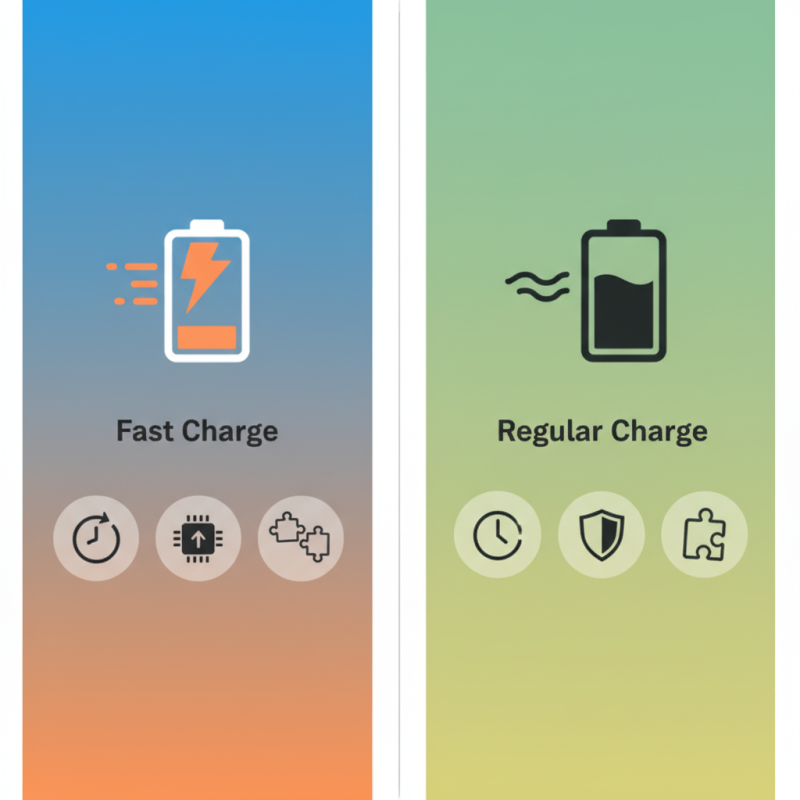
Top 10 Differences Between Fast Charge and Regular Chargers

Understanding Fast Charging Technology

Fast charging technology has transformed the way we power our devices. It significantly reduces the time needed to recharge batteries. This is achieved by delivering higher amounts of power through specialized cables and adapters. Fast chargers often use advanced circuitry to manage heat and maintain safety. Although it speeds up charging, some users worry about long-term battery health.

Many devices support various charging standards. Compatibility is crucial; not all fast chargers are the same. Some may work better with certain devices. This is where understanding wattage and amperage becomes important. Higher power ratings can lead to faster charging times. However, using an incompatible charger may lead to slower charging or no charge at all.

Tips: Always use certified cables. They ensure your device charges safely and efficiently. Avoid charging in hot environments; heat can degrade battery life. Lastly, consider your charging habits. Frequent fast charging can be convenient, but it might impact battery lifespan over time. Balance is key—normal charging has its benefits too. Regularly alternating between fast and standard charging could lead to better overall battery health.

Top 10 Differences Between Fast Charge and Regular Chargers

How Regular Chargers Function and Their Limitations

Regular chargers serve a fundamental role in the charging ecosystem. They typically deliver a standard voltage and current. This keeps your devices powered, but it can be slow. It often takes hours to achieve a full charge. This limitation can be frustrating, especially for heavy device users.

To understand regular chargers better, it's essential to know how they operate. They usually work with a set output, usually around 5V. Devices draw power at their own pace, which can lead to inefficient charging. As a result, battery health may decline over time. The lack of faster charging capabilities can also hinder usage in today's fast-paced world.

Tips: Always unplug the charger when not in use. This helps avoid energy waste. Also, make sure your cables are in good condition. Damaged cables can lead to slower charging speeds. Regularly check device ports for dust or debris, as this can also affect charging efficiency. Understanding these basics can improve your experience with regular chargers.

Key Differences in Charging Speed Between Fast and Regular Chargers

Charging speed is a key factor in today's technology-driven world. Fast chargers can deliver a significant boost in power compared to regular chargers. Generally, a fast charger can provide a higher wattage, which shortens the charging time for devices. For example, while a regular charger might take up to five hours, a fast charger could do it in just under two hours. This speed is crucial for users on the go.

However, not every device supports fast charging. Using a fast charger on a device that is not compatible can result in no improvement in speed. Additionally, frequent use of fast chargers may generate more heat, which can potentially affect battery longevity. It’s essential to balance speed with care for your devices. Charging habits should reflect the needs of your device. Sometimes, a slower charge overnight is better for maintaining battery health, rather than rapid charging throughout the day.

Ultimately, the choice between fast and regular chargers varies based on user needs. Understanding the inherent differences can help you make informed decisions while maximizing both convenience and battery life.

Impact of Battery Health on Charging Methods

When considering charging methods, battery health plays a vital role. Fast charging boosts power delivery but can stress batteries over time. A regular charger provides a gentler approach, extending overall battery lifespan. A balance is crucial.

Many users overlook how charging habits affect battery health. Frequent fast charging can lead to overheating. This condition degrades the battery's chemical structure. On the other hand, using a regular charger reduces heat. It's more beneficial for older batteries. Understanding this can help users make informed choices.

Tips: Avoid charging your device overnight. High temperatures while charging can harm battery health. Try to charge your device in cooler environments when possible. Regularly check battery settings for signs of degradation. Keeping your battery healthy ensures better performance and longevity.

Compatibility Issues with Fast Chargers and Devices

When considering fast chargers, compatibility issues often arise with certain devices. Fast charging technology typically relies on specific protocols. These protocols can vary widely between devices. For instance, many smartphones support varying levels of fast charging, but not all can utilize the highest speeds. According to a report by the International Telecommunication Union, around 30% of users experience charging inefficiencies due to these mismatches.

Moreover, fast chargers can sometimes produce excessive heat. This heat is detrimental to battery longevity. A study from the Battery University indicates that prolonged exposure to high temperatures can shorten battery lifespan by up to 20%. Users often overlook this aspect. While seeking convenience, they may inadvertently harm their device's battery.

It's crucial for consumers to verify compatibility before using a fast charger. Many chargers feature different outputs, ranging from 5W to 100W. Not all devices can handle higher wattages efficiently. This lack of awareness can lead to frustration and reduced performance. Familiarizing oneself with device specifications can mitigate these concerns. Additionally, regular chargers may sometimes be the safer choice for longer battery life.

FAQS

: What is the typical output of regular chargers?

: Regular chargers usually deliver around 5V of voltage. This is common for most devices.

Why are regular chargers sometimes frustrating to use?

They can take hours to fully charge devices. This is slow, especially for heavy users.

How does using a regular charger affect battery health?

Inefficient charging may lead to declining battery health over time. This could shorten device lifespan.

What common issues can affect charging efficiency?

Damaged cables and dust in device ports can slow down charging speeds. Regular checks are important.

Are fast chargers always beneficial for devices?

Not all devices support fast charging. Using an incompatible charger won’t improve speed at all.

Can frequent use of fast chargers harm device batteries?

Yes, they may generate extra heat, potentially affecting battery longevity in the long run.

What charging habits should I consider for device care?

Sometimes a slower overnight charge is better than fast charging throughout the day. It helps battery health.

What should I do when I'm not using a charger?

Always unplug it when not in use to avoid wasting energy. This is a simple, helpful tip.

How can I improve my experience with regular chargers?

Keep your cables in good condition and check ports regularly. Small changes can lead to better efficiency.

How do I choose between a fast and regular charger?

Consider your device’s needs and how you use it. Your choice should balance speed and battery care.

Conclusion

In understanding the differences between fast charge and regular chargers, it's essential to explore the underlying technology behind each method. Fast charging technology significantly reduces the time required to charge devices by increasing power output, allowing for a rapid influx of energy. In contrast, regular chargers operate at lower power levels, resulting in slower charging speeds and sometimes leading to longer wait times for users.

Moreover, the impact of battery health is a crucial factor in determining charging efficiency, as older batteries may not support fast charging capabilities. Compatibility issues can also arise, as not all devices are designed to handle the high voltage and current supplied by fast chargers. Ultimately, the question "What is the difference between fast charge and regular source chargers" highlights the speed, efficiency, and potential limitations associated with each charging method, underscoring the importance of choosing the right charger for your device's needs.

Henry

Henry

Henry is a dedicated marketing professional with a profound expertise in the company's offerings. With years of experience in the industry, he possesses an impressive understanding of the market dynamics and consumer behaviors that drive success. Henry is committed to sharing his insights through......