In 2026, the widespread use of source chargers has raised concerns about slow charging issues. Many users encounter frustration when their devices take longer than expected to charge. This problem is not just a minor inconvenience; it affects productivity and device usability. Understanding how to solve the problem of slow charging with source chargers requires both technical insights and practical strategies.
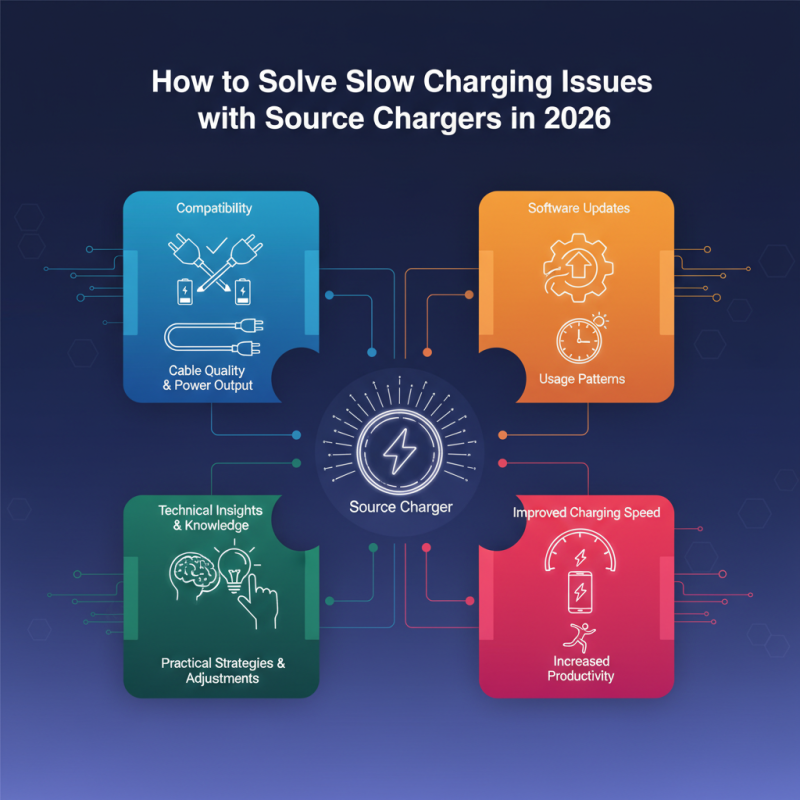
Several factors contribute to slow charging. The compatibility of the charger and device plays a crucial role. Additionally, cable quality and power output can drastically affect charging speed. Users must be aware of these elements to ensure optimal performance. A charger that seems effective may not always deliver the required power.
Adopting best practices can mitigate charging issues. Occasionally, users overlook updates that improve charging efficiency. Charging times can also vary based on usage patterns. It’s essential to recognize that solving slow charging requires both knowledge and adjustments. Small changes in habits can lead to significant improvements in charging times. Reflecting on these aspects makes a difference in everyday life.
Fast charging technology has become essential in 2026. As our dependence on devices grows, so does our need for efficient charging solutions. Users expect rapid recharging within minutes. A delay can lead to frustration, especially during busy days. The demand for quick charging has transformed how manufacturers design and develop chargers.
Understanding fast charging involves more than just speed. It is crucial to ensure battery longevity and efficiency. Users must recognize that not all fast chargers are adequate for high-capacity devices. Using inappropriate chargers can lead to overheating and reduced battery lifespan. The intricacies of charging protocols can be overwhelming, leaving users uncertain about the best options.
Moreover, the landscape of charging is continually evolving. There is a constant push for higher speeds, yet questions about safety persist. Fast charging can be detrimental if not managed properly. It's essential for users to stay informed and choose chargers wisely. Balancing speed and safety is critical for optimal performance. Small oversights can lead to bigger problems in the future.
When dealing with slow charging issues, it’s crucial to identify common factors that might be at play. One major cause could be the type of cable being used. Low-quality or damaged charging cables can significantly slow down the charging process. Look for visible wear or fraying. Sometimes, the issue lies within the connectors. Dirt or debris can hinder connections and slow charging speeds. Regularly inspecting and cleaning these areas is essential.
Another potential factor is the power source itself. Not all sockets provide the same level of energy. Using an overloaded power strip can lead to inefficiencies. Try plugging your charger directly into a wall socket to see if this improves the situation. Environment also plays a role; extreme temperatures can affect charging speeds. High heat can be especially detrimental, causing devices to throttle charging to protect their batteries.
Lastly, consider the device settings. Background applications can consume significant power while charging. Closing unnecessary apps may help accelerate the charge time. While these factors seem straightforward, they often go unnoticed. A systematic review may reveal deeply rooted issues that require attention and adjustment for optimal performance.
In 2026, slow charging issues persist as a common frustration for many users. Evaluating various types of source chargers helps illuminate this issue. Power delivery varies significantly among charger types. Some offer high wattage, while others may struggle to provide adequate power. Understanding these differences is crucial for addressing slow charging.
Consider wall chargers. They often deliver robust power efficiently. Yet, many users overlook the quality of the cable they use. A subpar cable can dilute the charger's effectiveness. Furthermore, USB-C chargers generally offer faster charging capabilities. However, not all devices are optimized for these chargers. Users might find discrepancies between advertised speeds and actual charging times.
Wireless chargers present another layer of complexity. While convenient, they often charge slower than wired options. In some cases, the alignment must be precise to maximize efficiency. Many users may not realize this, leading to frustration. Reflecting on the charger’s condition is equally important. Dust and wear can impede performance, reducing the overall charging speed. Keeping chargers in good condition and aligning them properly can enhance the charging experience.
In 2026, many users face slow charging issues with their source chargers. To tackle this, several practical tips can help enhance charging speed. Research indicates that using a charger with an output of at least 20 watts can significantly decrease charging time. Higher wattages allow for faster energy transfer to devices. Ensuring your device supports fast charging is crucial as well. Compatibility plays a key role in charging efficiency.
Keeping charging ports clean is often overlooked. Dust buildup can impede connectivity and slow the charging process. Studies show that dirt on ports can decrease charging speeds by up to 30%. Regularly inspect and clean the connectors, ensuring a solid connection. It’s also essential to monitor the temperature of both the device and the charger. Excess heat can slow down charging speeds and may even damage the battery, leading to a frustrating user experience.
Battery health is another factor that can’t be ignored. Over time, batteries lose efficiency, affecting charge time. Using features like battery optimization can help manage power usage effectively. It's important to reflect on usage habits; for instance, excessive background app activity can drain batteries faster than they charge, which poses a challenge for many users. Addressing these elements can lead to more reliable charging solutions.
The realm of charging technology is evolving rapidly. By 2026, we may witness unprecedented advancements. Industry reports suggest that wireless charging efficiency could reach 90%. This would reduce downtime significantly. Fast-charging solutions are also projected to have a profound impact, with speeds possibly exceeding 350 kW.
Innovations in battery chemistry are on the horizon. Solid-state batteries promise higher energy densities and faster charging times. They potentially decrease charging time by 50%. Another consideration is ultracapacitors, which may offer quick bursts of energy. Their lifespan could prove superior compared to traditional lithium-ion batteries.
Tips for improving charging efficiency: Ensure your device is compatible with the latest charging standards. Regularly clean charging ports to avoid impedance. Avoid using devices while charging to allow for optimum energy transfer. As technology progresses, keeping up with innovations is essential for optimal results.
| Charging Technology | Average Charging Speed (W) | Compatibility | Innovative Features | Projected Market Adoption Rate (%) |
|---|---|---|---|---|
| Ultra-Fast Charging | 300 | Smartphones, Laptops | Temperature Control, Battery Health Monitoring | 60 |
| Solar Chargers | 50 | Portable Devices, Cars | Eco-Friendly, Integrated Battery Storage | 40 |
| Wireless Charging Pads | 15 | Smartphones, Accessories | Multiple Device Charging, Anti-Overheat | 55 |
| Graphene Chargers | 250 | High-Performance Electronics | Rapid Recharge, Longer Battery Lifespan | 30 |
| Bi-Directional Chargers | 100 | Electric Vehicles, Home Appliances | Power Sharing, Grid Management | 25 |
: Fast charging is essential due to increased device dependence. Users require quick recharging to avoid frustration during busy days.
Inappropriate chargers can cause overheating and shorten battery lifespan. It’s crucial to use the right charger for your device.
Charger types vary in power delivery. Wall chargers often provide robust power, while some others may struggle with efficiency.
A subpar cable can significantly slow down charging. Always choose high-quality cables to maximize your charger’s effectiveness.
Wireless chargers are convenient but often slower. Proper alignment is needed for efficient charging, which users might overlook.
Dust and wear on chargers can impede performance. Regular maintenance of chargers enhances overall charging speed and experience.
Future advancements may include 90% efficiency in wireless charging and faster speeds beyond 350 kW. These changes could drastically reduce downtime.
Solid-state batteries offer higher energy densities and faster charging times. They could potentially decrease charging time by 50%.
Users should ensure device compatibility with charging standards, clean ports regularly, and avoid using devices while charging.
Reflecting on chargers' condition is vital. Regular checks can prevent performance issues and enhance the charging experience.
In 2026, the demand for fast charging has significantly increased, prompting the need to address issues related to slow charging with source chargers. To understand how to solve the problem of slow charging with source chargers, it's crucial to identify common causes such as incompatible cables, outdated technology, or excessive device usage during charging. Furthermore, evaluating the various types of source chargers can reveal their distinct impacts on charging efficiency.
Practical tips to enhance charging speed include using high-quality cables, ensuring adequate power output from the charger, and avoiding overuse of devices while they charge. Looking ahead, future innovations in charging technology, such as improved battery materials and faster charging protocols, offer promising solutions. By keeping these factors in mind, users can effectively tackle slow charging problems and optimize their charging experience.

Caiku Electronic